Articles Posted in Health and Safety Reports

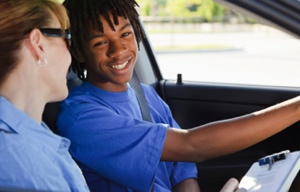
Teen Driver Boy.jpgThis fall Georgia teen drivers and parents were encouraged to set aside time to talk about road safety during the U.S. Department of Transportation’s Teen Driver Safety Week. Teen car collision legal experts warn, many of the tragic accidents they witness on a daily basis could be avoided by talking to teens about simple, safe driving habits. Parents should also take care to model these behaviors themselves. The DOT warns, “Parents serve as primary influences on teenage driving behavior.”

The NHSTA offers the following tips on talking to teen drivers. Please take time to talk to the young drivers in your life and help keep Georgia teens and roads safe!

Learn and follow your state graduated driver licensing (GDL) laws – GDL systems have been shown to reduce teen crashes. All states have three-stage GDL programs (learner’s permit, intermediate or provisional license, full licensure). During the process, restrictions are put in place so young drivers can gain critical driving experience in lower-risk situations and a gradual introduction to more complex tasks through controlled exposure to high-risk situations.

Create and sign a parent-teen driving contract – A parent-teen driving contract sets ground rules and creates and explains the consequences of breaking those rules. This ensures teen accountability, ownership of expectations, and an understanding that driving is a privilege that can be revoked.

Prohibit the use of electronic devices while driving – Driving while talking on the phone or while texting is risky for all drivers, but especially for teens. In 2010, 368 teen drivers ages 15 to 19 involved in fatal crashes were distracted, accounting for 13 percent of all fatal distraction affected crashes. Use of electronic devices while driving is also forbidden by law in many states for all drivers. Parents and caregivers should forbid the use of portable electronic devices while driving and also model safe behavior by turning off their cell phones while behind the wheel. Encourage your teen to speak up when someone is using an electronic device while driving. A recent NHTSA survey found that young people were less likely than other age groups to say something to a driver who made them feel unsafe.

Limit teen passengers and night driving – A NHTSA analysis found teen drivers were two-and-a-half times more likely to engage in one or more potentially risky behaviors when driving with one teenage peer compared to when driving alone. That risk increased with multiple passengers. In 2010, 1,326 passengers in young drivers’ vehicles were killed in crashes involving young drivers. Most nighttime fatal crashes of young drivers occur between 9 p.m. and midnight. NHTSA recommends a maximum of one passenger in the car with your teen at all times (no passengers if required by your state GDL law) and nighttime driving restrictions starting no later than 10 p.m.

Encourage your teen to always buckle up – Wearing a seat belt is the most effective protection for drivers and passengers in the event of a crash. In 2010, three out of five 16- to 20-year-old occupants killed in passenger vehicles were not wearing seatbelts.

Talk to your teen about alcohol – All states and the District of Columbia have 21-year-old minimum-drinking-age laws. In 2010, 22 percent of the young drivers involved in fatal crashes were drinking. Talk to your teen about the risks of both drinking and driving, and of riding with an impaired driver.

Establish regular supervised driving and feedback sessions – Most parents and caregivers are unaware of the number of hours of supervised driving teens must complete as part of the intermediate phase of their state’s GDL program. Parents should refer to the minimum supervised driving requirements required by their state, but are also encouraged to continue to drive with their teen in a variety of driving situations and environments, such as at night, in inclement weather, and in high traffic situations even beyond what’s required. More practice will only make them better drivers. Set aside a regular time to discuss your teen’s progress, experiences, concerns and achievements.
Screen Shot 2016-07-15 at 2.51.53 PMGeorgia Car Accident Victims: The Legal Avenue to Justice, Compensation


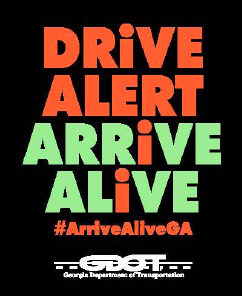
The Georgia Department of Transportation has launched the Drive Alert, Arrive Alive campaign to call attention to a dramatic increase in GA roadway fatalities. “2015 ended with 1,427 fatalities,” GDOT reports. Many of these fatalities were at the hands of distracted drivers and hundreds more resulted in serious injury. Our law firm represents victims of roadway accidents throughout the state of Georgia. We’ve recovered millions of dollars for our Clients, including a recent $29.25 million dollar verdict, and our mission is to help the victims these tragic and senseless accidents.

I Was Seriously Injured in a Motor Vehicle Accident.  What Assistance Can an Attorney Provide? 

After an accident, our Clients come in with a number of questions and concerns. Many of these relate to insurance negotiations, medical care and property damage. In some tragic circumstances, a loved one has been lost in an accident and grieving family members are uncertain of how to proceed.  A dedicated, experienced personal injury firm should be able to immediately provide victims of motor vehicle accidents with a strategic plan to navigate the coming days, months, and years. Each case is different and should be customized to the needs of the specific victim. Your initial consultation should be free, thorough and provide you with a solid understanding of your legal options.

Should I Speak With or Hire an Attorney that Contacted Me Directly, In the Hospital, Through Social Media, or Through an Investigator?

The American Bar Association Rule 7.3 states that a lawyer “shall not” contact a prospective Client through a “live telephone” or an “in-person” visit. If an attorney, or someone acting on behalf of an attorney, contacts you in this manner, that attorney is in violation of this Rule. This unethical and unprofessional activity on the part of the lawyer is good sign that you should stay away. It is imperative that you are represented by an attorney who is capable of advocating for you within the confines of the law, and an attorney who fails to abide by the Rules of Professional Conduct is probably not the best fit. In fact, any such attorney should be immediately reported to the local State Bar Association. If you have been contacted in such an unsolicited manner, contact us and we’ll assist you in filing a report.

Do I Need an Attorney to Negotiate with Insurance Companies?

Sadly, insurance companies are all too often more concerned with limiting their own financial exposure than providing victims with the compensation and long-term medical care they need. An experienced personal injury attorney will handle all negotiations with insurance companies to get victims the maximum recovery they deserve. An experienced personal injury attorney should also handle property damage claims related to your case. Be sure to ask any potential attorney about their experience negotiating with insurance companies. Having an experienced personal injury attorney during this complex negotiation process can mean the difference of hundreds of thousands of dollars in compensation.

How Do I Handle Medical Billing and Long-Term Medical Care While Waiting on an At-Fault Driver’s Insurance?

A comprehensive personal injury firm will assist Clients by acting as a liaison between their medical care providers and insurance companies. The firm should handle all communications and negotiations with medical billing offices and an exceptional attorney will even coordinate long-term medical appointments and Client transportation to medical providers, if needed.

Can I Afford an Attorney?

Clients frequently come in concerned that they won’t be able to afford legal help. We believe everyone has a right to exceptional legal service. We represent our Clients on a contingency agreement, which generally means that no fees or payments are owed until and unless we recover. This means our interests are always tied to that of our Clients. Be sure to ask any potential personal injury attorney about their fee schedule and whether they represent Clientele on a contingency basis before signing a contract.

You Deserve Justice. We Can Help.

The Murray Law Firm has an extensive and successful record representing Georgia victims and families devastated by distracted drivers. We offer our legal assistance, if desired. Anyone seeking further information or legal representation is encouraged to contact us via e-mail (click here) or by telephone at 888.842.1616. Consultations are free and confidential.
728x90 Justice

Continue reading →

200389576-001The Canadian Centre for Occupational Health and Safety (COHS) describes the potential risks of workplace parking lots and how employees may protect themselves from parking lot crime.

Always

  • Park near your building in a highly visible and well-lit area.
  • Park near the parking attendant, if there is one, or near the stairs or a well-lit exit in an underground lot.
  • Use the main building entrance–avoid rear or secluded exits.
  • Keep your valuables, including purses and recent purchases, out of sight. Always lock them in the trunk if you have to leave them in the car.
  • Lock the doors and roll up windows once you are in the vehicle.
  • Have a plan ahead of time. Know where you can go for safety and how to call for help.

Do Not

  • Do not use more than one parking spot, as it may anger another person.
  • Do not park next to large vans, trucks or other vehicles, as they will block your sight.
  • Do not have a personal identification tag on your key ring. If your keys are lost or stolen, a thief will be able to find your car or house.
  • Do not approach someone if they are loitering near your vehicle. Walk to a safe place, such as a lighted store, house or building. Call the police.
  • Do not dig in your purse or bag.
  • Do not wear headphones or be distracted by a cell phone conversation.
  • Do not carry heavy briefcases or bags that may get in the way.

Continue reading →