 Georgia Legal Report
Articles Posted in Security Negligence

Outdoor Working Hazards: NIOSH Urges Employers to Prevent and Control Employee Exposures


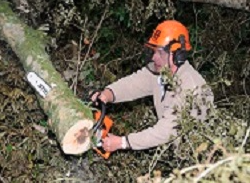
(NIOSH)
The National Institute for Occupational Safety and Health (NIOSH) outlines potential hazards to outdoor workers and the responsibility of employers to mitigate these risks:
Outdoor workers are exposed to many types of hazards that depend on their type of work, geographic region, season, and duration of time they are outside. Employers should train outdoor workers about their workplace hazards, including hazard identification and recommendations for preventing and controlling their exposures.
Physical Hazards
Physical hazards to outdoor workers may include extreme heat, extreme cold, noise, and sun exposure. Extreme heat can cause heat stroke, heat cramps, heat exhaustion, heat rash, and other problems. Extreme cold can cause hypothermia, frostbite, and other problems. Repeated exposures to loud noise can lead to permanent, incurable hearing loss or tinnitus.
- Extreme Cold: Cold-related illnesses, injuries, first aid and prevention.
- Extreme Heat: Heat-related illnesses, first aid, and prevention.
- Sun Exposure: Sunburn, skin cancer, first aid and prevention.
- Noise: Hearing loss is one of the most common work-related illnesses in the U.S.
Biological Hazards

(NIOSH)
Biological hazards include vector-borne diseases, venomous wildlife and insects, and poisonous plants. Venomous snakes, spiders, scorpions, and stinging insects can be found throughout various geographic regions, and are especially dangerous to workers who have allergies to the animal. Poisonous plants can cause allergic reactions if their oils come in contact with skin. These plants can also be dangerous if burned and their toxins are inhaled. Vector-borne diseases may be spread to workers by insects, such as mosquitoes or ticks. When a mosquito or tick bites a worker, it may transfer a disease-causing agent, such as a parasite, bacterium, or virus.
- Poisonous Plants
- Venomous Spiders
- Venomous Snakes
- Insects and Scorpions
- West Nile Virus
- Tick-borne Diseases
- Lyme Disease
Other Hazards
Outdoor workers may encounter other hazards in addition to the physical and biological hazards described here. They may be exposed to pesticides or other chemical hazards, traumatic injury hazards, or other safety and health hazards depending on their specific job and tasks.
Employee Rights
You have the right to:
- Work in a safe place.
- Receive safety and health training in any language that you understand.
- Ask questions if you don’t understand instructions or if something seems unsafe.
- Use and be trained on required safety gear, such as hard hats, goggles and ear plugs.
- Exercise your workplace safety rights without retaliation or discrimination.
- File a confidential complaint with OSHA if you believe there is a serious hazard or that your employer is not following OSHA standards.
We Fight for Victims of Workplace Injuries in Georgia …Contact us Now for a Free Consultation.
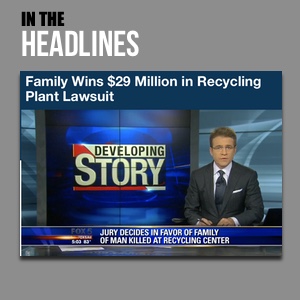 The Murray Law Firm has recovered millions of dollars for victims of unsafe workplaces in Georgia, and recently obtained a $29.25 million dollar verdict for one of our Clients in Fulton County State Court.
We represent our Clients on a contingency agreement, which generally means that no fees or payments are owed until and unless we recover. Anyone seeking further information or legal representation is encouraged to contact us via e-mail (click here) or by telephone at 888.842.1616. Consultations are free and confidential.
Choosing the Right Attorney
Selecting the right attorney for you or your family is highly important. You must feel confident that the attorney you hire has a complete understanding of the law applicable to your particular case, and has successful experience in handling such cases.
Important: Do not hire a lawyer who has violated the Rules of Professional Conduct!!!
You should not hire an attorney who calls you or visits you unsolicited, or anyone that contacts you directly to offer legal services. This activity is strictly prohibited by Rule 7.3 of the American Bar Association (ABA) Model Rules of Professional Conduct, which states as follows:
 A LAWYER “SHALL NOT” CONTACT A PROSPECTIVE CLIENT THROUGH A “LIVE TELEPHONE” OR AN “IN-PERSON” VISIT.
– RULE 7.3, ABA MODEL RULES OF PROFESSIONAL CONDUCT.
If an attorney, or someone acting on behalf of an attorney, contacts you in this manner, that attorney is in violation of this Rule. This unethical and unprofessional activity on the part of the lawyer is good sign that you should stay away. It is imperative that you are represented by an attorney who is capable of advocating for you within the confines of the law, and an attorney who fails to abide by the Rules of Professional Conduct is probably not the best fit. In fact, any such attorney should be immediately reported to the local State Bar Association. If you have been contacted in such an unsolicited manner, contact us and we’ll assist you in filing a report.

Contingency Fees Disclaimer: “Contingent attorneys’ fees refers only to those fees charged by attorneys for their legal services. Such fees are not permitted in all types of cases. Court costs and other additional expenses of legal action usually must be paid by the client.”